
What You Need to Know About the New Jersey Wrongful Death Law
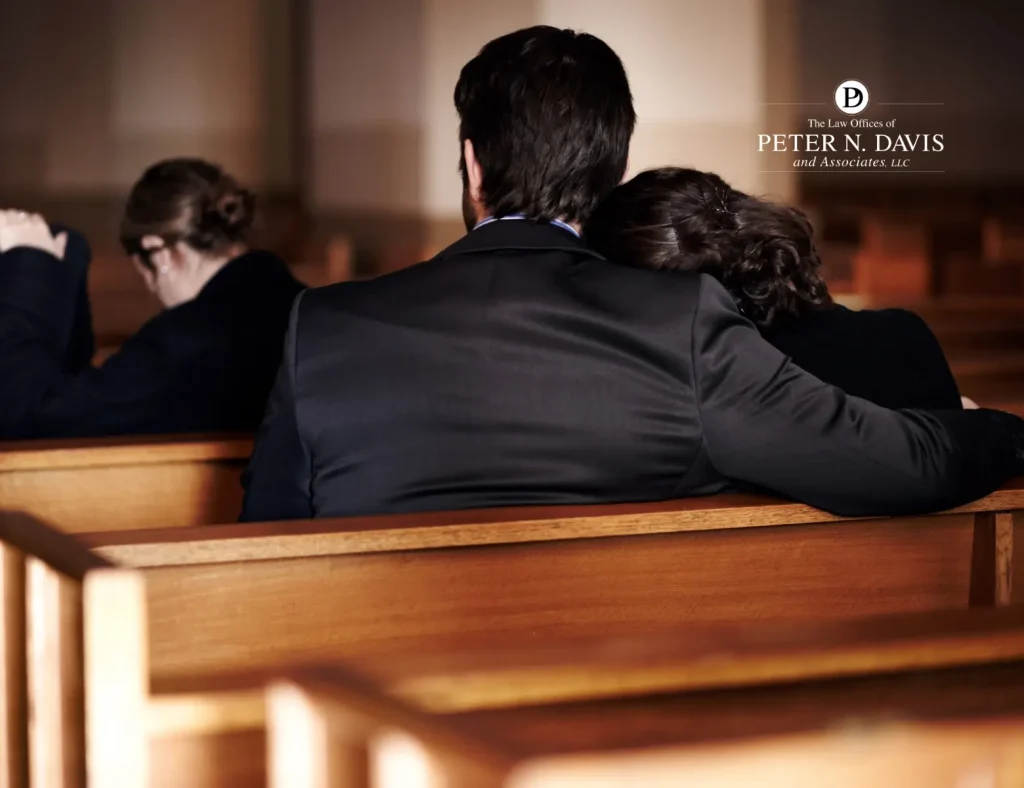
The sudden loss of a loved one changes everything. One day life feels ordinary. The next you are left making decisions no family ever expects to face: arranging a funeral, handling medical bills, and wondering how to replace the financial support your household depended on. When someone else’s negligence causes that loss, the grief is compounded by anger and unanswered questions.
New Jersey wrongful death law gives surviving family members a legal path forward. While it cannot take away the pain of a loved one’s death, it allows you to hold responsible parties accountable and seek compensation for the economic and emotional damages suffered. Knowing who can file a wrongful death claim, what damages may be recovered, and how the statute of limitations applies can make the legal process clearer as you consider your next steps.
What Is a Wrongful Death Under New Jersey Law?
A wrongful death occurs when a person dies as a direct result of another party’s negligence, recklessness, or wrongful act. New Jersey’s wrongful death statute is found at N.J. Stat. Ann. § 2A:31-1. It allows certain family members to file a wrongful death action when the death would not have occurred without the defendant’s negligence.
Common causes of wrongful death cases in New Jersey include:
- Medical malpractice and preventable medical errors
- Car, truck, and motorcycle accidents caused by negligent drivers
- Workplace accidents and unsafe conditions
- Dangerous or defective products
- Criminal acts such as assaults or drunk driving
In New Jersey, a wrongful death claim can be brought if the person could have pursued a personal injury lawsuit had they survived. In other words, if someone’s death was caused by negligence, medical malpractice, or a wrongful act that would have supported a personal injury case, it may qualify as wrongful death under state law.
Who Can File a Wrongful Death Lawsuit in New Jersey?
Unlike some states, New Jersey does not allow every family member to file a wrongful death claim directly. Instead, the law requires the personal representative of the person who passed away (the decedent) to bring the legal action. If no representative was named in a will, the court may appoint one.
If the claim is successful, any financial recovery is then distributed to the victim’s surviving family members. Those who may benefit typically include:
- Surviving spouse
- Children, including legally adopted children
- Parents if there is no spouse or child
- Other relatives financially dependent on the decedent
These family members, often called the decedent’s heirs, are the ones who benefit from any financial recovery. Even if you are eligible to benefit, you must act quickly because New Jersey places strict time limits on filing a wrongful death action.
Statute of Limitations in New Jersey Wrongful Death Cases
New Jersey law imposes strict deadlines. Most wrongful death claims must be filed within two years of the decedent’s death, as outlined in N.J. Stat. Ann. § 2A:31-3.
If you miss this deadline, the court may dismiss your claim entirely. There are very limited exceptions, such as deaths caused by homicide where a criminal case is pending. Acting promptly is vital to preserve your legal rights.
Once the timing requirements are met, families often want to know what damages may be recovered through a wrongful death claim.
Damages Recoverable in Wrongful Death Cases
The goal of a wrongful death lawsuit is to recover damages for the financial support and services the victim would have provided had they lived. New Jersey law allows recovery of pecuniary losses, which means financial losses that can be measured in dollars. This can include both direct economic damages and the financial value of certain non-economic aspects.
Economic Damages
Economic damages compensate the family for measurable financial losses, such as:
- Lost financial support the victim would have contributed
- Funeral expenses and burial costs
- Medical bills related to the decedent’s death
- Value of household services provided by the victim
Financial Value of Non-Economic Losses
Certain non-economic aspects may also be considered only to the extent that they have a financial value. For example, the loss of companionship, guidance, and care provided by the decedent can be factored into damages. However, New Jersey’s Wrongful Death Act does not allow recovery for grief, sorrow, or emotional distress suffered by surviving family members.
In addition to wrongful death damages, families may also have a related claim if the decedent suffered before death. This is called a survivorship action.
Survivorship Claims and Punitive Damages
A survivorship claim allows the decedent’s estate to pursue damages the person could have claimed had they lived, such as conscious pain and suffering before death. In rare cases, if the defendant’s conduct was willful, wanton, or egregious, punitive damages may also be available under a survivorship claim..
Both actions can be filed together, and damages from survivorship claims are distributed according to the victim’s estate plan or intestacy laws.
Knowing the potential damages is only part of the process. To succeed, the personal representative must also prove that the defendant’s negligence caused the death.
Proving Negligence in a Wrongful Death Claim
Like any personal injury claim, wrongful death cases require proving negligence. To recover damages, the personal representative must show:
- The defendant owed a duty of care to the decedent.
- The defendant breached that duty through negligence or wrongful conduct.
- The breach directly caused the decedent’s death.
- The surviving family members suffered measurable damages as a result.
Proving negligence often requires accident reports, medical records, expert testimony, and witness statements. Your wrongful death attorney will gather this evidence to build the strongest possible case.
When compensation is awarded, the court then determines how it should be distributed among eligible family members.
How Compensation Is Distributed
When a wrongful death suit succeeds, the court distributes the financial compensation to eligible family members. Factors that influence distribution include:
- The degree of financial dependence of each family member
- The amount of financial support lost
- The victim’s income and contributions to the household
Compensation is intended to provide long-term financial support for the family after the loss. Understanding how compensation may be distributed is only one part of protecting your rights. Having legal representation can make a difference in how your family moves forward.
Compassionate Representation for Families After a Wrongful Death
Losing someone you love because of another person’s negligence brings profound grief and unexpected challenges. On top of emotional pain, surviving family members are often left facing medical expenses, funeral costs, and the loss of financial support that once sustained the household.
For more than 30 years, The Law Offices of Peter N. Davis & Associates has stood with families across New Jersey in wrongful death cases. Our New Jersey personal injury attorneys approach these cases with both determination and compassion, working to pursue compensation that can ease financial pressures and provide stability during a painful time.
If you need answers about your rights under New Jersey’s wrongful death law, contact us today. Call (973) 279-7246(973) 279-7246 or fill out our online form to schedule your free consultation with a wrongful death lawyer.
We know nothing can replace your loss, but taking action can help protect your family’s future and honor your loved one.
Copyright © 2025. The Law Offices of Peter N. Davis & Associates, LLC. All rights reserved.
The information in this blog post (“post”) is provided for general informational purposes only and may not reflect the current law in your jurisdiction. No information in this post should be construed as legal advice from the individual author or the law firm, nor is it intended to be a substitute for legal counsel on any subject matter. No reader of this post should act or refrain from acting based on any information included in or accessible through this post without seeking the appropriate legal or other professional advice on the particular facts and circumstances at issue from a lawyer licensed in the recipient’s state, country, or other appropriate licensing jurisdiction.
The Law Offices of Peter N. Davis & Associates, LLC
72 Essex Street, Suite 2,
Lodi, NJ 07644
(973) 279-7246(973) 279-7246
https://peterdavislaw.com/
Ask a Question,
Describe Your Situation,
Request A Free Case Review
Fill out the form below or feel free to call us at (973) 279-7246(973) 279-7246
Required Fields*
Your Information Is Safe With Us
We respect your privacy. The information you provide will be used to answer your question or to schedule an appointment if requested.
What Our Clients Are Saying About Us!
Real Clients and Real Reviews
I had a very positive experience with the Law Offices of Peter N. Davis & Associates. Nick Barrone handled my case, and I couldn’t be happier with the level of service I received. After my auto accident in Jersey City, NJ, I was dealing with ongoing back and neck pain and wasn’t sure what to expect from the legal process. Nick was professional, attentive, and always made sure I understood each step along the way. He took the time to answer my questions and genuinely cared about my situation. I felt supported throughout the entire process, which made a stressful situation much easier to handle. The firm worked diligently on my behalf and kept me informed the whole time. I truly appreciate their dedication and effort in helping me through this difficult experience. I highly recommend them to anyone in need of a reliable and compassionate attorney.

I highly recommend Peter Davis & Associates. In particular, Mr. David Ventoso, Esq. did an excellent job helping and assisting me. Mr. Ventoso was knowledgeable, professional and responsive.
All the staff members at the firm took the time to explain every detail and step of the process; they answered all my questions and were always kind. Special thanks to Ms. Carolyn for doing an amazing job.
If you're looking for an attorney in NJ who is trustworthy and really cares, Peter Davis & Associates is an excellent choice.

I highly recommend the Law Offices of Peter N. Davis.
After I was rear-ended in a car accident and suffered injuries to my neck and back, they provided outstanding representation during a very difficult time in my life.
My attorney, Robert Russotti, and my case manager, Muminah Ramadan, were professional, compassionate, and attentive throughout the entire process. They helped me obtain the medical treatment I needed and were always available to answer my questions and address any concerns I had. Their diligence, communication, and dedication gave me peace of mind while I focused on my recovery.
I am truly grateful for the support and guidance they provided during my hardship. I would not hesitate to recommend the Law Offices of Peter N. Davis to my family and friends.

Thank you so much for your help.
I want to especially thank David Ventoso for always informing me what was going on with my case. He kept up with all my questions and answered every time I called him.
Awesome staff also
Thank you again
Angela Selby

I had a great experience working with David Ventoso at the Law Offices of Peter N. Davis after my motor vehicle accident. I suffered injuries to my knee and lower back, and Mr. Ventoso along with Carolyn guided me through the entire process from start to finish.
They were always responsive to my questions and concerns, kept me informed, and made everything as stress-free as possible. They also referred me to receive the medical treatment I needed, which made a huge difference during my recovery.
Thanks to their hard work and dedication, I was very pleased with my compensation. I highly recommend this law firm to any friends or family in need of a personal injury attorney.