
What to Do if You Suffer Soft Tissue Damage After a Car Accident in NJ
A car accident doesn’t have to involve broken bones or visible wounds to leave a lasting mark. You might leave the scene believing you avoided serious injury, only to wake up days later with stiffness, swelling, or pain that wasn’t there before. Soft tissue damage after a car accident is common, and it often affects daily life in ways people don’t expect, from disrupted sleep to difficulty working or moving comfortably.
What makes soft tissue injuries frustrating is how easily they’re dismissed early on. Symptoms can take time to surface, imaging may not show clear damage, and insurance companies often treat these injuries as minor even when they interfere with normal routines.
In the days and weeks following a car accident, decisions about medical care, documentation, and insurance can influence how a soft tissue injury is addressed and whether complications arise later. Knowing what qualifies as soft tissue damage and how these injuries are viewed under New Jersey law can help you approach the situation with clearer expectations.
What Counts as Soft Tissue Damage After a Car Accident
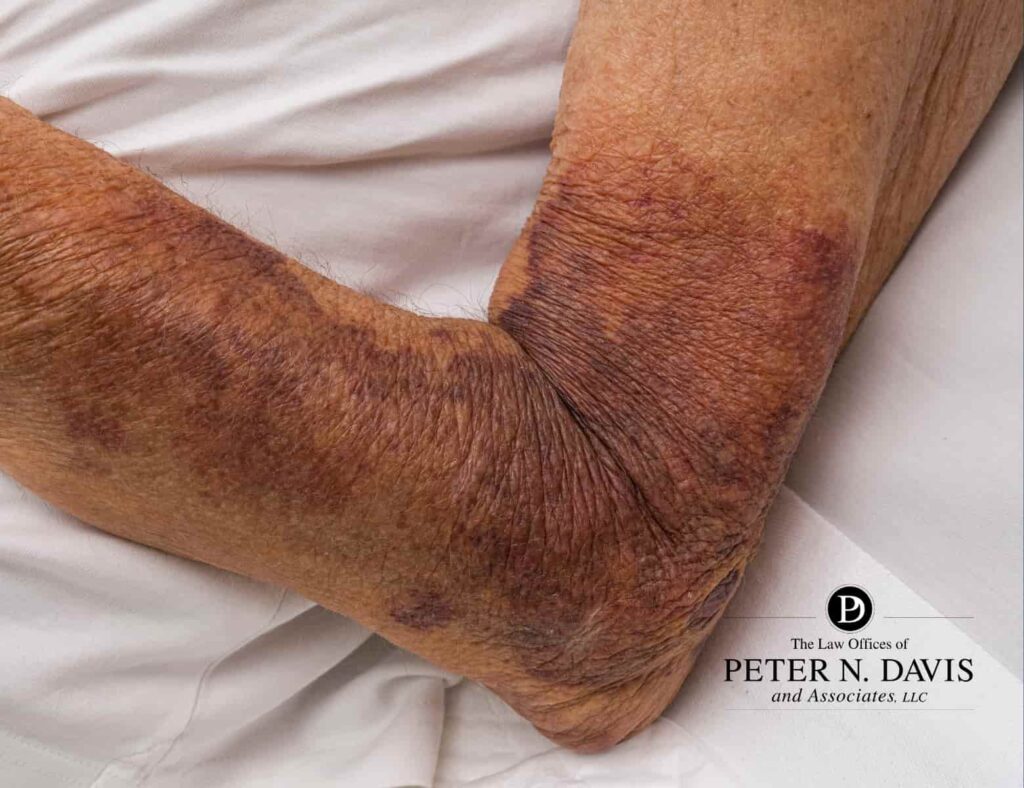
Soft tissue injuries involve damage to the muscles, tendons, and ligaments that support movement and stability in the body. They include sprains (ligament tears), strains (muscle or tendon tears), and contusions (bruises). After a car crash, these injuries often show up as pain, swelling, stiffness, or limited movement that wasn’t there before.
Common soft tissue injuries after a vehicle accident include:
- Whiplash affecting the neck and upper back
- Muscle strains and sprains
- Torn ligaments in the shoulder, knee, or ankle
- Tendon injuries that limit movement
- Deep bruising and inflammation
Soft tissue injuries can occur in most car accidents, including rear-end collisions, pedestrian accidents, motorcycle accidents, and multi-vehicle crashes. They can also occur alongside more obvious injuries, such as broken bones or a traumatic brain injury, which sometimes causes the soft tissue damage to receive less attention early on.
Why Soft Tissue Injuries Are Often Overlooked
Even when people know they’ve hurt something in a car accident, soft tissue injuries can be hard to pin down at first. One reason soft tissue injuries cause confusion after a car accident is that they don’t always show up right away.
Standard imaging like X-rays may appear normal, even when pain, swelling, or stiffness continues to build over time. It’s not uncommon for symptoms to worsen days after the crash, once adrenaline fades and the body starts reacting to the trauma.
Seek Medical Attention as Soon as You Can
When symptoms aren’t obvious right away, it’s easy to wait and see if they resolve on their own. But soft tissue injuries can evolve, and what feels manageable at first can become more limiting over time. Seeking medical attention early allows a provider to document symptoms as they develop and connect them to the car accident.
Medical treatment for soft tissue injuries may include:
- Diagnostic exams and follow-up visits
- Pain management
- Physical therapy to restore mobility
- Referrals to specialists for persistent symptoms
Medical records help show the progression of symptoms over time.
How New Jersey Car Insurance Handles Medical Bills
Once medical treatment begins, questions about insurance coverage usually follow. Many people assume the at-fault driver’s insurance immediately covers treatment, but New Jersey handles car accident medical bills differently.
New Jersey uses a no-fault insurance system for car accidents. This means your own vehicle insurance policy may provide Personal Injury Protection (PIP) benefits that cover medical expenses, regardless of who caused the crash. For many soft tissue injuries, PIP is the first source of payment for doctor visits, diagnostic testing, and physical therapy.
Under New Jersey law, PIP benefits are governed by N.J.S.A. 39:6A-4, which outlines medical coverage following an auto accident. PIP coverage often pays for medical care related to soft tissue injuries, including physical therapy. Issues tend to arise when insurers question how long treatment should continue, whether certain care is necessary, or whether symptoms are connected to the accident itself rather than a prior condition.
When Soft Tissue Damage Leads to a Personal Injury Claim
A personal injury claim may be an appropriate option when soft tissue damage is caused by someone else’s negligence and creates losses that go beyond basic medical coverage. These claims focus on how the injury has affected your ability to function, earn income, and recover fully after the crash.
Whether a claim moves forward, and what types of damages may be available, can depend on several factors. These may include how the accident occurred, the insurance coverage involved, the course of medical treatment, how the injury has affected daily life over time, and whether the auto policy includes a limitation on lawsuit. Because these issues vary from case to case, reviewing the circumstances with an attorney can help clarify how New Jersey law may apply.
Proving Soft Tissue Injuries in a Car Accident Case
Once a soft tissue injury becomes part of a car accident claim, documentation starts carrying more weight than most people expect. Because these injuries do not always appear on imaging tests or present immediate symptoms, the way they are recorded over time often becomes central to how the claim is reviewed.
Soft tissue injuries are evaluated based on consistency, medical support, and how the symptoms affect daily life, not just on whether there is visible damage. Evidence that may support a soft tissue injury claim includes:
- Medical records documenting symptoms and treatment
- Physical therapy notes showing progress or limitations
- Photos of swelling or bruising
- Statements describing daily limitations
- Records of missed work and lost wages
Insurance providers frequently question soft tissue damage by pointing to gaps in treatment, delayed care, or a lack of objective findings. For example, even a one-week delay in seeing a doctor can be used by insurers to argue the injury happened somewhere else (like at the gym or home) rather than the accident.
Consistent medical documentation helps address those arguments and connects the injury to the accident itself rather than to unrelated causes.
Comparative Negligence in New Jersey Car Accident Cases
Even when medical records clearly support a soft tissue injury, insurance companies often look for ways to reduce what they pay by questioning fault. This is where New Jersey’s comparative negligence rules become part of the conversation.
New Jersey follows a modified comparative negligence rule. If you are found to be 51 percent or more responsible for a car accident, recovery is barred. When fault is assessed at a lower percentage, compensation may still be available, but the potential compensation would be reduced based on the share assigned.
In soft tissue injury cases, comparative negligence arguments often focus on behavior rather than the injury itself. Insurance companies may point to distraction, speed, or minor traffic violations to suggest shared responsibility, even when another driver caused the crash.
Soft Tissue Injuries and Long-Term Impact
Fault arguments and insurance disputes often focus on percentages and paperwork, but the real issue for many people is how a soft tissue injury affects daily life. What begins as stiffness or soreness after a car accident can gradually interfere with work, sleep, and routine activities.
Soft tissue damage may limit how you move, how long you can sit or stand, and how comfortably you perform physical tasks. These injuries do not always follow a predictable timeline, and symptoms can linger even after treatment begins.
Soft tissue injuries can affect:
- Range of motion
- Ability to perform physical labor
- Concentration due to chronic discomfort
- Participation in daily activities
For some people, these limitations last far longer than expected, creating ongoing medical expenses and time away from work. When soft tissue injuries interfere with earning capacity or require extended care, those effects often become a central part of how a claim is evaluated.
Next Steps After a Soft Tissue Injury From a New Jersey Car Accident
Soft tissue damage after a car accident often raises practical questions about medical care, insurance coverage, and whether a claim goes beyond PIP benefits. When injuries stem from unsafe driving or another party’s negligence, it’s reasonable to want clear information about how New Jersey law addresses these situations.
At The Law Offices of Peter N. Davis & Associates, we’ll discuss the details of your car accident, the soft tissue injuries involved, and the steps already taken with medical providers and insurers. We represent car accident victims throughout New Jersey and review claims involving soft tissue injuries, medical bills, and related financial losses.
Many people begin searching online for a “New Jersey car crash lawyer” or “New Jersey personal injury lawyer” once pain persists or insurance coverage becomes disputed. A free case evaluation allows you to ask questions and gain straightforward information about potential legal paths.
Call (973) 279-7246(973) 279-7246 or complete the confidential online form to schedule your free case review with a soft tissue injury attorney. The firm works on a contingency fee basis, meaning there are no upfront fees. Our goal is to protect your rights and seek justice for you or your loved one.
Copyright © 2025. The Law Offices of Peter N. Davis & Associates, LLC. All rights reserved.
The information in this blog post (“post”) is provided for general informational purposes only and may not reflect the current law in your jurisdiction. No information in this post should be construed as legal advice from the individual author or the law firm, nor is it intended to be a substitute for legal counsel on any subject matter. No reader of this post should act or refrain from acting based on any information included in or accessible through this post without seeking the appropriate legal or other professional advice on the particular facts and circumstances at issue from a lawyer licensed in the recipient’s state, country, or other appropriate licensing jurisdiction.
The Law Offices of Peter N. Davis & Associates, LLC
72 Essex Street, Suite 2
Lodi, New Jersey 07644
(973) 279-7246(973) 279-7246
https://peterdavislaw.com/
Ask a Question,
Describe Your Situation,
Request A Free Case Review
Fill out the form below or feel free to call us at (973) 279-7246(973) 279-7246
Required Fields*
Your Information Is Safe With Us
We respect your privacy. The information you provide will be used to answer your question or to schedule an appointment if requested.
What Our Clients Are Saying About Us!
Real Clients and Real Reviews
I had a very positive experience with the Law Offices of Peter N. Davis & Associates. Nick Barrone handled my case, and I couldn’t be happier with the level of service I received. After my auto accident in Jersey City, NJ, I was dealing with ongoing back and neck pain and wasn’t sure what to expect from the legal process. Nick was professional, attentive, and always made sure I understood each step along the way. He took the time to answer my questions and genuinely cared about my situation. I felt supported throughout the entire process, which made a stressful situation much easier to handle. The firm worked diligently on my behalf and kept me informed the whole time. I truly appreciate their dedication and effort in helping me through this difficult experience. I highly recommend them to anyone in need of a reliable and compassionate attorney.

I highly recommend Peter Davis & Associates. In particular, Mr. David Ventoso, Esq. did an excellent job helping and assisting me. Mr. Ventoso was knowledgeable, professional and responsive.
All the staff members at the firm took the time to explain every detail and step of the process; they answered all my questions and were always kind. Special thanks to Ms. Carolyn for doing an amazing job.
If you're looking for an attorney in NJ who is trustworthy and really cares, Peter Davis & Associates is an excellent choice.

I highly recommend the Law Offices of Peter N. Davis.
After I was rear-ended in a car accident and suffered injuries to my neck and back, they provided outstanding representation during a very difficult time in my life.
My attorney, Robert Russotti, and my case manager, Muminah Ramadan, were professional, compassionate, and attentive throughout the entire process. They helped me obtain the medical treatment I needed and were always available to answer my questions and address any concerns I had. Their diligence, communication, and dedication gave me peace of mind while I focused on my recovery.
I am truly grateful for the support and guidance they provided during my hardship. I would not hesitate to recommend the Law Offices of Peter N. Davis to my family and friends.

Thank you so much for your help.
I want to especially thank David Ventoso for always informing me what was going on with my case. He kept up with all my questions and answered every time I called him.
Awesome staff also
Thank you again
Angela Selby

I had a great experience working with David Ventoso at the Law Offices of Peter N. Davis after my motor vehicle accident. I suffered injuries to my knee and lower back, and Mr. Ventoso along with Carolyn guided me through the entire process from start to finish.
They were always responsive to my questions and concerns, kept me informed, and made everything as stress-free as possible. They also referred me to receive the medical treatment I needed, which made a huge difference during my recovery.
Thanks to their hard work and dedication, I was very pleased with my compensation. I highly recommend this law firm to any friends or family in need of a personal injury attorney.