How to Overcome Jury Bias Against Motorcyclists in NJ Courts
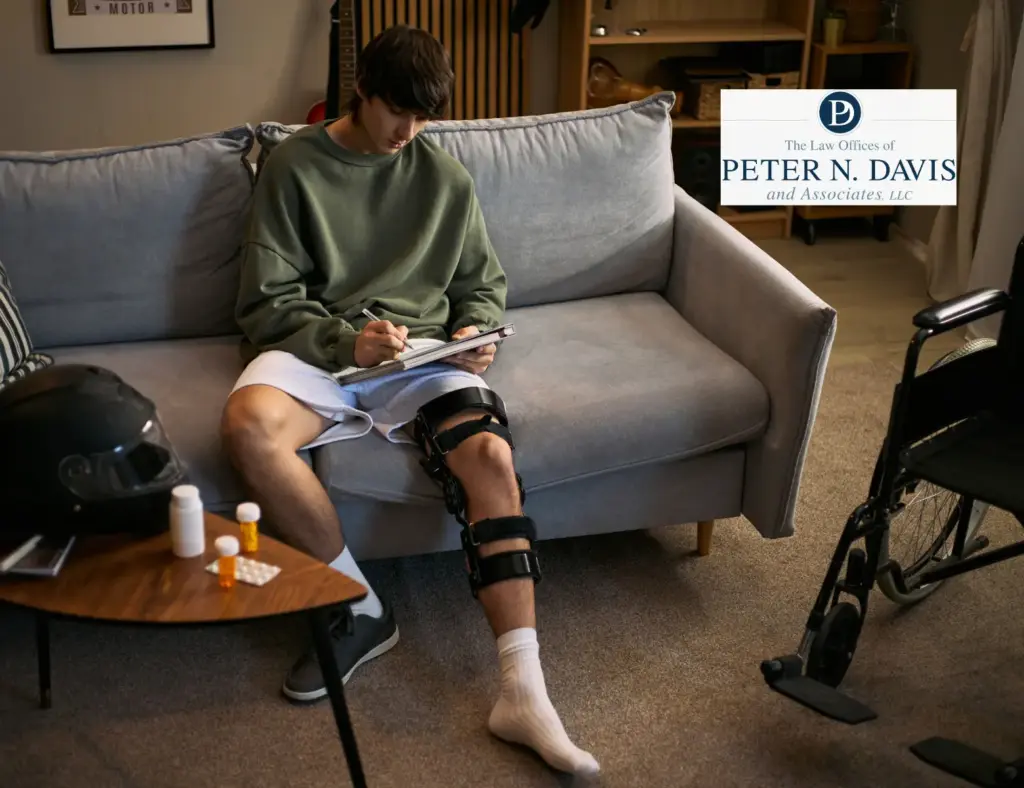
Motorcycle accidents often leave riders facing catastrophic injuries, overwhelming medical bills, lost wages, and an uncertain future. As you begin pursuing a motorcycle accident claim, you may have another concern that’s less obvious but equally important: whether people will unfairly assume you caused the crash simply because you were riding a motorcycle.
Unfortunately, those concerns aren’t unfounded. Jury bias against motorcyclists is a real factor in some cases, and insurance companies may hold preconceived ideas about motorcycle riders that have nothing to do with how a particular motorcycle accident occurred. Fortunately, a successful motorcycle accident lawsuit is built on evidence, not stereotypes. An experienced New Jersey motorcycle accident lawyer knows how to challenge unfair assumptions and keep the focus where it belongs: on the facts surrounding your crash.
At a Glance
- Jury bias against motorcyclists can influence how some people initially view a motorcycle accident case, even when the evidence points to another driver’s negligence.
- Insurance companies may rely on these assumptions to dispute liability or reduce a motorcycle accident settlement.
- Strong evidence, including a police report, witness statements, medical records, and expert testimony, can overcome unfair assumptions.
- New Jersey’s comparative negligence law may reduce your compensation if you’re partially at fault, and bars recovery entirely if you’re 51% or more responsible.
- Motorcycle accident lawsuits in New Jersey must be filed within two years, although different deadlines may apply in certain situations.
- An experienced New Jersey motorcycle accident attorney can protect your rights while building the strongest possible case.
Why Jury Bias Against Motorcyclists Exists
Much of jury bias against motorcyclists is rooted in longstanding societal misconceptions rather than the facts of a particular crash. Television, movies, news stories, and social media sometimes portray motorcycle riders as reckless, thrill-seeking, or willing to ignore traffic laws. Those portrayals can influence opinions long before someone ever serves on a jury.
In reality, each motorcycle accident is different. Many New Jersey motorcycle accidents occur because another driver fails to notice a motorcycle, misjudges its speed, or violates the rider’s right of way.
Common causes of motorcycle crashes include:
- Distracted driving
- Unsafe left turns
- Following too closely
- Failing to yield
- Unsafe lane changes
- Driving while impaired
- Speeding by the other driver
In many of these collisions, driver negligence is the primary cause. Because motorcycles are smaller than passenger vehicles, drivers sometimes claim they “never saw the motorcycle.” That statement doesn’t automatically mean the rider was responsible. Instead, it may demonstrate that the other driver failed to maintain a proper lookout before pulling into the rider’s path.
Although some people assume motorcycle riders willingly accept greater risks, that doesn’t make them responsible for another person’s negligence. In fact, according to the National Highway Traffic Safety Administration, motorcyclists are approximately 27 times more likely to die in traffic crashes than occupants of passenger vehicles. (Source: NHTSA, Motorcycle Safety)
Motorcycles also lack important safety features such as airbags and seat belts, which explains why motorcycle accidents often lead to catastrophic injuries, traumatic brain injuries, spinal cord injuries, and other serious injuries requiring extensive medical treatment.
How Jury Bias Can Affect a Motorcycle Accident Lawsuit
Most motorcycle accident claims settle before reaching trial. However, the possibility of a jury verdict influences negotiations from the very beginning.
Motorcyclists often face bias during motorcycle accident lawsuits because some jurors may bring preconceived ideas about riders into the courtroom. While jurors are instructed to decide each case based solely on the evidence, attorneys understand that stereotypes can sometimes influence how liability and damages are viewed if they aren’t addressed effectively.
Insurance companies recognize this possibility. They know some people unfairly associate motorcycles with speeding or reckless behavior, and they may attempt to use those assumptions during settlement negotiations by arguing that the rider shares responsibility for the collision. This can lead to lower settlement offers or greater disputes over liability.
In some cases, insurance adjusters argue that:
- The rider was traveling too fast.
- The rider should have anticipated the driver’s actions.
- The rider accepted greater risks by choosing to ride.
- The injuries aren’t as severe as claimed.
- The rider’s own actions caused the crash.
These arguments don’t determine liability. Evidence does. If negotiations don’t produce a fair settlement, your motorcycle accident lawsuit may proceed to trial.
During jury selection, attorneys use targeted questioning to identify prospective jurors who may hold unfair assumptions about motorcycle riders. This process, known as voir dire, identifies potential bias before testimony begins so jurors can evaluate the case fairly.
New Jersey has also taken steps to reduce the influence of implicit bias within its jury system by providing guidance and education that encourage jurors to decide cases based on evidence rather than stereotypes or personal assumptions. While no system can completely eliminate bias, these safeguards promote fairer trials.
Common Misconceptions About Motorcycle Riders
Many assumptions about motorcycle riders have little connection to reality. An experienced motorcycle accident lawyer works to replace speculation with objective evidence.
“Motorcyclists Always Speed”
Some riders exceed the speed limit, just as some passenger vehicle drivers do. However, simply being involved in a motorcycle crash doesn’t prove a rider was speeding.
Instead, investigators examine evidence such as:
- The police report
- The official crash report
- Skid marks
- Vehicle damage
- Electronic data
- Roadway conditions
- Physical evidence from the accident scene
Objective evidence provides a far more accurate picture than assumptions.
“Motorcycle Riders Know They’re Taking the Risk”
Choosing to ride motorcycles doesn’t excuse careless driving by others. Every driver has a legal responsibility to watch for motorcycles, obey traffic laws, and operate their vehicle safely. A rider’s decision to enjoy a motorcycle doesn’t reduce another driver’s duty to exercise reasonable care.
“Protective Gear Means the Rider Expected to Crash”
Some jurors may make assumptions based on motorcycle jackets, helmets, leather clothing, or other riding gear.
In reality, this equipment is designed to reduce injuries if a collision occurs. Responsible riders wear protective gear because they recognize the dangers created by negligent drivers, not because they expect to cause an accident.
“The Driver Didn’t See the Motorcycle”
One of the most common explanations after a motorcycle accident is that the driver simply “didn’t see” the motorcycle. That statement doesn’t necessarily assign blame to the rider.
Drivers have a duty to look carefully before changing lanes, turning left, or entering traffic. Because motorcycles present a smaller visual profile than passenger vehicles, inattentive drivers sometimes fail to notice them until it’s too late.
How Strong Evidence Can Overcome Jury Bias
The strongest response to unfair assumptions is objective evidence. Rather than relying on opinions, your attorney works to gather documentation that plays a central part in proving fault in a motorcycle accident, showing exactly how the crash happened and who was responsible.
Important evidence often includes:
- The police report
- The official crash report
- Photographs of the accident scene
- Photos of visible injuries
- Vehicle damage documentation
- Witness statements
- Surveillance or dash camera footage
- Cell phone records when distracted driving is suspected
- Medical records
- Opinions from accident reconstruction experts
Many people have limited experience operating motorcycles and may not fully understand motorcycle handling, braking distances, visibility, or crash dynamics. Accident reconstruction experts explain these technical issues using objective evidence rather than assumptions, so jurors can better understand how the collision occurred.
Medical documentation is equally important. Records showing emergency care, surgeries, rehabilitation, physical therapy, and anticipated future medical treatment establish the full extent of your injuries and the financial impact they’ve had on your life.
If possible, preserve your damaged motorcycle after the collision. The motorcycle itself may contain valuable physical evidence that experts can examine when proving liability.
Steps You Can Take After a Motorcycle Crash
The actions you take immediately after a motorcycle crash can strengthen both your motorcycle accident claim and any future motorcycle accident lawsuit.
If your injuries allow, you should:
- Call 911 and request law enforcement and emergency medical care.
- Seek prompt medical attention, even if you initially feel well.
- Photograph the accident scene, your injuries, and each vehicle involved.
- Collect contact information for witnesses.
- Gather witness statements whenever possible.
- Keep copies of each medical record, bill, and treatment recommendation.
- Document your medical expenses, medical bills, lost wages, and lost income.
- Preserve your motorcycle until it can be inspected.
- Avoid discussing fault with the insurance company before speaking with a motorcycle accident attorney.
These simple steps gather critical evidence while memories remain fresh and physical evidence is still available.
How New Jersey Law Can Affect Your Motorcycle Accident Claim
Several New Jersey laws can directly affect your motorcycle accident claim, your ability to recover compensation, and the strategy used throughout your motorcycle accident lawsuit.
New Jersey’s Comparative Negligence Rule
New Jersey follows a modified comparative negligence system under N.J.S.A. 2A:15-5.1. If you’re found partially responsible for the motorcycle accident, your compensation may be reduced by your percentage of fault. However, if you’re more than 50% responsible, you cannot recover damages from the other party. (Source: NJ Courts, Model Civil Jury Charge 7.31)
Because jurors may make assumptions about motorcycle riders, an experienced motorcycle accident attorney works to present clear evidence that accurately explains how the collision occurred and challenges attempts to assign unfair blame.
Motorcycle Riders Are Not Covered by PIP
Unlike occupants of most passenger vehicles, motorcycle riders generally are not covered by New Jersey Personal Injury Protection (PIP) benefits. (Source: NJ Motor Vehicle Commission, Insurance Requirements) That means you may need to rely on your health insurance or other available resources while pursuing compensation from the at-fault driver or another liable party.
New Jersey Filing Deadlines
You have two years from the date of the motorcycle accident to file a motorcycle accident lawsuit in New Jersey. (Source: NJ Courts, What Is the Statute of Limitations for the Claim in My Case?)
However, if your accident involved a government vehicle or another public entity, additional rules may apply. In many situations, you must serve a notice of claim within 90 days under the New Jersey Tort Claims Act. (Source: NJ Treasury, Division of Risk Management, Notice of Tort and Contract Claim)
Because missing a deadline can affect your ability to pursue compensation, it’s important to speak with a motorcycle accident lawyer as soon as practical after the collision.
Building a Strong Motorcycle Accident Claim
A successful motorcycle accident claim begins with a thorough investigation. Your attorney may obtain surveillance footage, review the police report, interview witnesses, preserve physical evidence, consult accident reconstruction experts, and gather your medical documentation to establish liability and demonstrate the full extent of your losses.
Before filing many motorcycle accident lawsuits, your attorney may also prepare a demand letter for the insurance company. A demand letter summarizes how the collision occurred, outlines your injuries, documents your financial losses, explains why the other party is legally responsible, and identifies the compensation being sought. Although many claims settle after this stage, some require litigation before a fair resolution can be reached.
Preparing a persuasive claim from the outset often places your attorney in a stronger position during settlement negotiations.
Recovering Compensation After a Motorcycle Accident
Each motorcycle accident case is unique, so there isn’t a standard settlement amount. Published settlement estimates for motorcycle accident cases vary widely from source to source, and no attorney can accurately value a claim without reviewing its specific facts.
Factors affecting a motorcycle accident settlement may include:
- The severity of your injuries
- The cost of current medical treatment
- Future medical expenses
- The need for future medical treatment
- Lost wages or lost income
- Reduced earning capacity
- Property damage
- Available insurance coverage
- Whether comparative negligence applies
Because motorcycle accidents frequently involve catastrophic injuries, compensation may also include damages for pain and suffering, permanent disability, disfigurement, and reduced quality of life.
In the most tragic cases, surviving family members may pursue a wrongful death claim after a fatal collision. A successful wrongful death action may recover damages permitted under New Jersey law.
Why You Should Work With an Experienced Motorcycle Accident Lawyer
Motorcycle accident litigation often presents challenges that aren’t as common in other personal injury cases. Insurance companies may dispute liability, question the severity of your injuries, or argue that your own actions contributed to the collision. An experienced New Jersey motorcycle accident lawyer understands how these arguments develop and how to respond with evidence rather than assumptions.
Depending on your case, your attorney may:
- Investigate the motorcycle accident
- Review the police report and crash report
- Gather critical evidence
- Interview witnesses
- Consult accident reconstruction experts
- Obtain surveillance footage
- Calculate your financial losses
- Negotiate with insurance companies
- Prepare your motorcycle accident lawsuit for trial if necessary
Although many cases resolve through settlement negotiations, preparing each case as though it will be presented to a jury often strengthens negotiations from the beginning.
If a trial becomes necessary, your attorney continues working to keep the jury’s attention focused on credible evidence rather than stereotypes. In limited circumstances, attorneys may also pursue appropriate post-trial motions if legal issues arise that could affect the fairness of the proceedings.
Frequently Asked Questions
Are juries really biased against motorcycle riders?
Some prospective jurors may have preconceived ideas about motorcycle riders, but each juror is expected to decide the case based on the evidence presented at trial. Attorneys use jury selection to identify potential bias before testimony begins.
Can jury bias reduce a motorcycle accident settlement?
It can. If insurance companies believe jurors may unfairly blame a motorcyclist, they may offer less during settlement negotiations. Strong evidence can counter those assumptions.
What evidence is most important in a motorcycle accident case?
Important evidence often includes the police report, the crash report, photographs of the accident scene, witness statements, surveillance footage, medical records, and testimony from accident reconstruction experts.
Are motorcycle riders covered by PIP insurance in New Jersey?
No. Unlike occupants of most passenger vehicles, motorcycle riders generally aren’t covered by New Jersey Personal Injury Protection benefits.
How long do I have to file a motorcycle accident lawsuit?
You have two years from the date of the motorcycle accident. Different deadlines may apply if a government entity is involved.
Does comparative negligence affect motorcycle accident claims?
If you’re partially responsible for the accident, your potential compensation may be reduced by your percentage of fault. If you’re more than 50% responsible, you generally cannot recover damages from the other party.
Should I preserve my motorcycle after the accident?
If possible, yes. The motorcycle may contain valuable physical evidence that establishes liability and explains how the collision occurred.
What if the insurance company blames me for the crash?
Don’t assume the insurance company’s position is correct. An attorney can investigate the collision, gather evidence, and challenge unsupported allegations regarding fault.
Will each motorcycle accident lawsuit go to trial?
Many cases settle before trial. However, preparing each case for the possibility of trial often improves settlement negotiations.
When should I contact a motorcycle accident attorney?
It’s generally best to contact an attorney as soon as possible after a motorcycle accident so important evidence can be preserved and your legal rights protected.
Protect Your Rights After a New Jersey Motorcycle Accident
A motorcycle accident can leave you facing serious injuries, mounting medical bills, lost wages, and uncertainty about what comes next. If you’re also dealing with questions about liability, insurance coverage, or concerns that unfair assumptions could affect your motorcycle accident claim, knowledgeable legal guidance can make a meaningful difference.
At The Law Offices of Peter N. Davis & Associates, we’ve spent more than 30 years representing injured people throughout New Jersey in complex personal injury claims, including motorcycle accident lawsuits. Our New Jersey motorcycle accident lawyers understand how comparative negligence, insurance investigations, disputed liability, and jury perceptions can influence these cases. We work to gather critical evidence, build persuasive claims, and pursue fair compensation based on the facts, not stereotypes.
You won’t pay anything unless we recover compensation for you. Your free consultation is available 24/7 because accidents don’t happen on a schedule. Call (973) 279-7246(973) 279-7246 or complete our online form to request your free consultation.
Injured in Jersey? Peter’s Got Your Back!
Copyright © 2026. The Law Offices of Peter N. Davis & Associates, LLC. All rights reserved.
The information in this blog post (“post”) is provided for general informational purposes only and may not reflect the current law in your jurisdiction. No information in this post should be construed as legal advice from the individual author or the law firm, nor is it intended to be a substitute for legal counsel on any subject matter. No reader of this post should act or refrain from acting based on any information included in or accessible through this post without seeking the appropriate legal or other professional advice on the particular facts and circumstances at issue from a lawyer licensed in the recipient’s state, country, or other appropriate licensing jurisdiction.
The Law Offices of Peter N. Davis & Associates, LLC
72 Essex Street, Suite 2,
Lodi, NJ 07644
(973) 279-7246(973) 279-7246
https://peterdavislaw.com/
Ask a Question,
Describe Your Situation,
Request A Free Case Review
Fill out the form below or feel free to call us at (973) 279-7246(973) 279-7246
Required Fields*
Your Information Is Safe With Us
We respect your privacy. The information you provide will be used to answer your question or to schedule an appointment if requested.