
Who Pays for Damages After Hitting a Pedestrian in a Crosswalk in Newark, NJ?
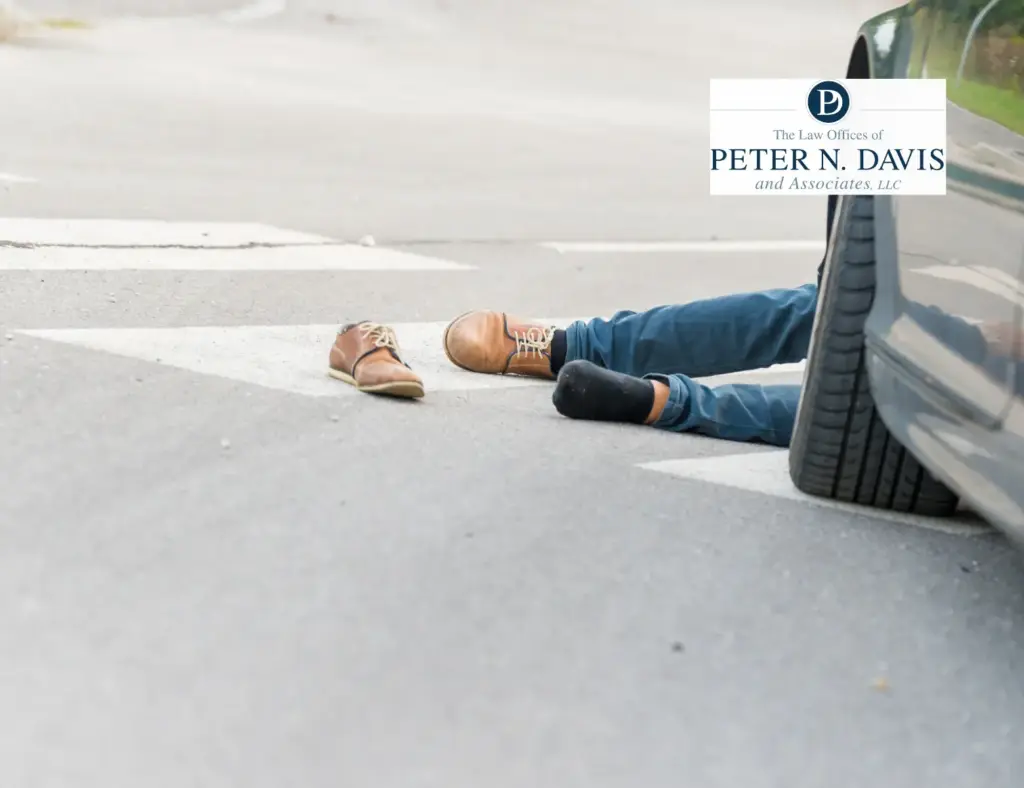
Pedestrian accidents can happen in a matter of seconds, but the financial and physical consequences can last for months or even years. If a driver strikes a pedestrian while they’re crossing the street, one of the first questions people ask is who pays for the damages. The answer depends on several factors, including where the accident happened, whether traffic laws were followed, and whether either party contributed to the crash.
In many situations involving hitting a pedestrian in a crosswalk, the driver may be responsible for the pedestrian’s injuries and related losses. However, liability is not always automatic. New Jersey law requires both drivers and pedestrians to follow certain rules designed to promote pedestrian safety and reduce accidents.
If you were injured in a Newark pedestrian accident, understanding New Jersey crosswalk laws and how fault is determined can let you protect your rights and make informed decisions about your claim.
At a Glance
- Driver Duty to Yield: Drivers must yield to pedestrians in marked crosswalks and at unmarked crosswalks within an intersection, except where traffic signals, police officers, or a pedestrian tunnel or overpass control the crossing.
- No-Fault Insurance First: Under New Jersey’s no-fault law, PIP from the pedestrian’s own policy, a household relative’s policy, or NJPLIGA typically pays medical bills first, regardless of fault.
- Modified Comparative Fault: A pedestrian may share fault if they violate traffic laws. Under the 51% bar rule, being 51% or more at fault bars any recovery.
- Evidence is King: Materials such as police reports, witness statements, and video footage heavily impact how liability is determined.
Does the Driver Always Pay After Hitting a Pedestrian in a Crosswalk?
Not necessarily. While drivers must exercise reasonable care and yield to pedestrians in many situations, New Jersey follows a comparative negligence system. This means fault can be shared between multiple parties.
For example, a driver may be responsible if they:
- Fail to stop for pedestrians in a crosswalk
- Ignore traffic signals
- Drive while distracted
- Exceed posted speed limits
- Fail to use due caution when approaching a pedestrian crossing
However, a pedestrian may also share responsibility if they:
- Cross against pedestrian signals or other traffic control devices
- Suddenly leave a curb and enter the roadway
- Walk directly into the path of a vehicle
- Cross at an unsafe location when a pedestrian tunnel, overpass, or other place designated for crossing is available
The facts surrounding the accident determine who pays for damages and whether fault is shared.
What Do New Jersey Crosswalk Laws Require?
New Jersey law provides strong protections for pedestrians. Drivers must yield to pedestrians in marked crosswalks and many situations involving an unmarked crosswalk at an intersection.
Under New Jersey’s Stop and Stay Stopped law, drivers approaching a marked or unmarked crosswalk must stop and stay stopped when a pedestrian is within the lane in which the vehicle is traveling or within an adjacent lane approaching that lane. In other words, drivers must remain stopped until the pedestrian reaches the opposite curb or is no longer in danger.
A driver cannot simply slow down and continue through the intersection. The law requires a complete stop when necessary to allow the pedestrian to cross safely.
New Jersey law also prohibits a driver from overtaking and passing another vehicle that has stopped for pedestrians at a crosswalk. If a stopped vehicle has yielded to a pedestrian, the other vehicle must also remain stopped.
These requirements apply to both marked crosswalks and many marked and unmarked crosswalks throughout the state.
Consequences Drivers May Face
A driver who fails to stop for pedestrians or violates New Jersey traffic laws may face more than civil liability. Depending on the circumstances, penalties may include:
- Traffic citations and points on the driver’s record
- Heavy court fines
- Mandatory community service requirements
- Increased auto insurance premiums
In cases involving serious injuries, driving under the influence (DUI), or hit-and-run reckless conduct, severe criminal consequences and jail time may apply.
Responsibilities Pedestrians Must Follow
Pedestrians have rights, but they also have responsibilities. Pedestrian right of way in New Jersey comes with conditions, and ignoring them can affect a claim later.
- Obey pedestrian signals and traffic signals
- Use designated crosswalks whenever possible
- Yield the right of way when required by law
- Walk facing traffic when sidewalks are unavailable
- Wear reflective clothing when walking at night
- Exercise caution when crossing busy roadways
- Avoid suddenly leaving a curb and entering the path of a vehicle
Pedestrians in marked crosswalks have the right of way, but that doesn’t mean they can disregard safety rules. A pedestrian who violates traffic laws may be found partially responsible for an accident.
How Comparative Negligence Affects Pedestrian Accident Claims
One reason these cases can become complicated is New Jersey’s comparative negligence law. Insurance companies routinely investigate whether both parties contributed to the accident to shield themselves from payouts.
For example, imagine a driver is traveling slightly above the speed limit while a pedestrian crosses against a red signal. Both parties have contributed to the collision.
In that situation, a jury will determine the exact percentages of fault. New Jersey follows a modified comparative negligence rule under N.J.S.A. 2A:15-5.1:
- If the pedestrian’s share of fault is 50% or less: Their final financial compensation is simply reduced by that exact percentage. For instance, a $100,000 verdict becomes $80,000 if the pedestrian is found 20% at fault.
- If the pedestrian’s share of fault is 51% or more: They are completely barred from recovering any compensation at all from the driver.
Because insurers may argue a pedestrian shares more fault than they actually do, gathering strong evidence is one of the more important parts of a pedestrian accident claim.
What Damages May Be Available After a Pedestrian Accident?
Pedestrians often suffer serious, life-altering injuries because they have zero physical protection against the force of a moving motor vehicle.
Under New Jersey’s no-fault system, medical bills are typically paid first through Personal Injury Protection (PIP) coverage. That coverage can come from the pedestrian’s own auto policy, a household relative’s auto policy, or, if neither applies, the New Jersey Property-Liability Insurance Guaranty Association (NJPLIGA), which exists for exactly this situation.
Once those PIP benefits are exhausted, or for losses PIP doesn’t cover, an injured pedestrian may pursue compensation from the at-fault driver’s insurance for:
- Medical expenses beyond your initial PIP policy limits
- Estimated future medical treatment and rehabilitation costs
- Lost income and past missed wages
- Reduced earning capacity if you cannot return to your normal career
- Pain and suffering
- Permanent physical impairment or disfigurement
- Severe emotional distress and trauma
The amount available depends on the severity of the injuries, the evidence presented, and the degree of fault assigned to each party.
What Evidence Determines Who Pays?
Several forms of objective evidence must be gathered to establish clear driver liability:
- Police Reports: Responding officers document witness statements, roadway conditions, traffic signal patterns, and preliminary fault citations.
- Surveillance or Traffic Camera Footage: Video evidence can clearly show if the pedestrian had the right of way or if the driver was speeding or looking at a phone.
- Witness Statements: Independent bystanders provide unbiased accounts of what happened right before the collision.
- Vehicle Damage and Physical Evidence: The location of vehicle dents, windshield cracks, skid marks, and scene debris are used to reconstruct the exact mechanics of the crash.
- Accident Reconstruction Analysis: In complex cases, engineering professionals mathematically evaluate visibility, stopping distance, and vehicle speeds to establish liability.
When Should You Contact a Newark, NJ Pedestrian Accident Lawyer?
After a serious pedestrian accident, determining liability is not always straightforward. Insurance companies may argue that the pedestrian contributed to the crash, even when the driver failed to follow New Jersey law.
An attorney can investigate the accident, gather evidence, communicate with insurers, and identify all available sources of compensation. The sooner evidence is preserved, the easier it may be to establish what happened and protect your claim.
Frequently Asked Questions
Is a driver automatically at fault for hitting a pedestrian in a crosswalk?
Although drivers must often yield to pedestrians, liability depends on the facts of the accident and whether either party violated traffic laws.
What is the difference between a marked and unmarked crosswalk?
Marked crosswalks are identified by painted lines or pavement markings. An unmarked crosswalk may exist at many intersections even when no painted lines are present.
Can a pedestrian be partially responsible for an accident?
A pedestrian who ignores traffic signals, crosses unlawfully, or suddenly enters traffic may share fault under New Jersey’s comparative negligence rules.
What if the driver had a green signal?
A green signal does not automatically relieve a driver of responsibility. Drivers must still exercise reasonable care and watch for pedestrians lawfully crossing the roadway.
Does insurance cover pedestrian accident injuries?
In many situations, insurance coverage may be available for medical expenses, lost income, and other damages resulting from a pedestrian accident.
Protect Your Rights After a Newark Pedestrian Accident
A pedestrian accident can leave you dealing with serious injuries, mounting medical bills, lost income, and uncertainty about what comes next. When questions arise about fault, insurance coverage, and who should pay for the damages, having knowledgeable legal guidance can make a real difference.
At The Law Offices of Peter N. Davis & Associates, we’ve spent over 30 years representing injured pedestrians throughout New Jersey as they pursue compensation after serious accidents. Our Newark, NJ pedestrian accident lawyers understand how crosswalk laws, comparative negligence rules, and insurance investigations can affect these cases, and we know what it takes to build a persuasive claim.
You won’t pay anything unless we recover compensation for you. Your consultation is free, and we’re available 24/7 because accidents don’t happen on a schedule. Call (973) 279-7246(973) 279-7246 or complete our online form to request your free case evaluation.
Injured in Jersey? Peter’s Got Your Back!
Copyright © 2026. The Law Offices of Peter N. Davis & Associates, LLC. All rights reserved.
The information in this blog post (“post”) is provided for general informational purposes only and may not reflect the current law in your jurisdiction. No information in this post should be construed as legal advice from the individual author or the law firm, nor is it intended to be a substitute for legal counsel on any subject matter. No reader of this post should act or refrain from acting based on any information included in or accessible through this post without seeking the appropriate legal or other professional advice on the particular facts and circumstances at issue from a lawyer licensed in the recipient’s state, country, or other appropriate licensing jurisdiction.
The Law Offices of Peter N. Davis & Associates, LLC
72 Essex Street, Suite 2,
Lodi, NJ 07644
(973) 279-7246(973) 279-7246
https://peterdavislaw.com/
Ask a Question,
Describe Your Situation,
Request A Free Case Review
Fill out the form below or feel free to call us at (973) 279-7246(973) 279-7246
Required Fields*
Your Information Is Safe With Us
We respect your privacy. The information you provide will be used to answer your question or to schedule an appointment if requested.
What Our Clients Are Saying About Us!
Real Clients and Real Reviews
I had a very positive experience with the Law Offices of Peter N. Davis & Associates. Nick Barrone handled my case, and I couldn’t be happier with the level of service I received. After my auto accident in Jersey City, NJ, I was dealing with ongoing back and neck pain and wasn’t sure what to expect from the legal process. Nick was professional, attentive, and always made sure I understood each step along the way. He took the time to answer my questions and genuinely cared about my situation. I felt supported throughout the entire process, which made a stressful situation much easier to handle. The firm worked diligently on my behalf and kept me informed the whole time. I truly appreciate their dedication and effort in helping me through this difficult experience. I highly recommend them to anyone in need of a reliable and compassionate attorney.

I highly recommend Peter Davis & Associates. In particular, Mr. David Ventoso, Esq. did an excellent job helping and assisting me. Mr. Ventoso was knowledgeable, professional and responsive.
All the staff members at the firm took the time to explain every detail and step of the process; they answered all my questions and were always kind. Special thanks to Ms. Carolyn for doing an amazing job.
If you're looking for an attorney in NJ who is trustworthy and really cares, Peter Davis & Associates is an excellent choice.

I highly recommend the Law Offices of Peter N. Davis.
After I was rear-ended in a car accident and suffered injuries to my neck and back, they provided outstanding representation during a very difficult time in my life.
My attorney, Robert Russotti, and my case manager, Muminah Ramadan, were professional, compassionate, and attentive throughout the entire process. They helped me obtain the medical treatment I needed and were always available to answer my questions and address any concerns I had. Their diligence, communication, and dedication gave me peace of mind while I focused on my recovery.
I am truly grateful for the support and guidance they provided during my hardship. I would not hesitate to recommend the Law Offices of Peter N. Davis to my family and friends.

Thank you so much for your help.
I want to especially thank David Ventoso for always informing me what was going on with my case. He kept up with all my questions and answered every time I called him.
Awesome staff also
Thank you again
Angela Selby

I had a great experience working with David Ventoso at the Law Offices of Peter N. Davis after my motor vehicle accident. I suffered injuries to my knee and lower back, and Mr. Ventoso along with Carolyn guided me through the entire process from start to finish.
They were always responsive to my questions and concerns, kept me informed, and made everything as stress-free as possible. They also referred me to receive the medical treatment I needed, which made a huge difference during my recovery.
Thanks to their hard work and dedication, I was very pleased with my compensation. I highly recommend this law firm to any friends or family in need of a personal injury attorney.