
Is Lane Splitting Legal in NJ?
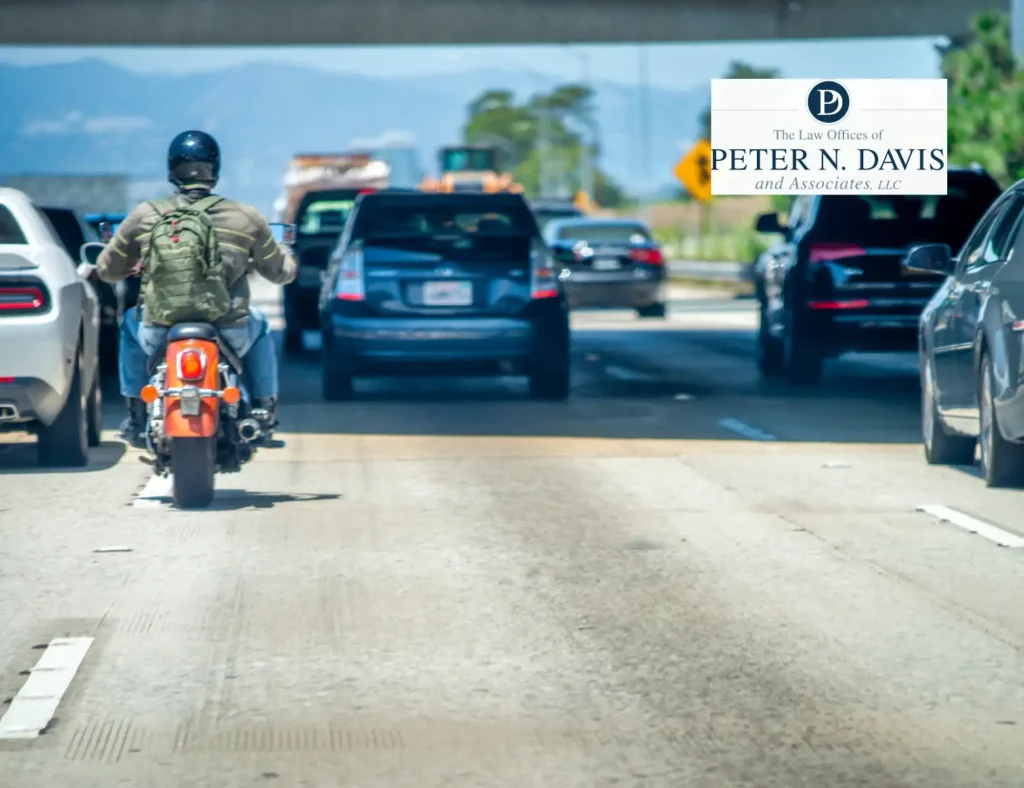
Motorcycles can offer a faster, more efficient way to travel when traffic slows to a crawl. If you’ve ever been stuck behind a line of cars and watched a rider move between vehicles, you may have wondered whether that maneuver is allowed. Many riders and drivers ask the same question: Is lane splitting legal in NJ?
The short answer is no. While New Jersey law does not specifically use the term “lane splitting,” the practice is illegal under current law. Riders who engage in lane splitting may face a traffic violation and could encounter additional challenges if they’re involved in a motorcycle accident.
How New Jersey treats lane splitting, lane filtering, and lane sharing affects your safety on the road and your rights if a collision occurs.
At a Glance
- Lane splitting is illegal in New Jersey.
- Lane filtering is also not currently permitted under state law.
- Riding two motorcycles side-by-side in the same lane isn’t addressed by statute, but is discouraged by the state’s own safety guidance.
- A rider involved in a lane splitting accident may still be able to seek compensation.
- New Jersey’s comparative negligence rules can affect a personal injury claim after a motorcycle crash.
What Is Lane Splitting?
Lane splitting occurs when a motorcycle travels between lanes of traffic moving in the same direction. Instead of remaining within a full lane, the rider passes between moving vehicles or vehicles traveling at different speeds.
For example, a motorcycle operator may attempt to pass slow-moving traffic by riding between adjacent lanes. While some riders view this as a way to avoid congestion, many drivers don’t expect a motorcycle to appear between vehicles, increasing the risk of an accident. Understanding the rules around lane splitting in New Jersey is different from several related concepts that often create confusion discussed below.
Lane Filtering
Lane filtering in New Jersey involves riding between stopped traffic or very slow-moving traffic, often at red lights. In some other states, lane filtering legal provisions allow riders to move to the front of traffic under exact conditions intended to improve safety. However, New Jersey does not currently allow lane filtering.
Lane Sharing
Lane sharing occurs when two motorcycles attempt to ride side-by-side in a single lane. New Jersey law doesn’t specifically address this practice, so it’s neither authorized nor banned by statute. However, the New Jersey Motorcycle Manual advises against it, noting that vehicles and motorcycles each need a full lane to operate safely, and instructs riders to discourage lane sharing by others.
Riding Between Lanes
Whether traffic is stopped or moving, riding between lanes of traffic is treated the same way in New Jersey. Motorcyclists should remain within a full lane rather than attempting to pass between vehicles.
Is Lane Splitting Considered Illegal in New Jersey?
Although New Jersey doesn’t have a statute that explicitly uses the phrase “lane splitting,” several traffic laws effectively prohibit the practice.
Under New Jersey law, a motorcycle is allowed to use a full lane just like any other motor vehicle. N.J.S.A. 39:4-88 is New Jersey’s statute governing driving on marked lanes, and requires drivers to maintain their vehicle within a single lane and not move from that lane unless it can be done safely. The law does not authorize riders to travel between lanes of traffic or share a lane with a car.
Because of this, police officers may cite a rider for conduct such as:
- Unsafe passing
- Improper lane usage
- Reckless driving
- Failure to maintain lane position
The current law reflects concerns about public safety. Drivers changing lanes may not see a motorcycle approaching between vehicles. Blind spots, sudden braking, road conditions, and limited reaction time can all contribute to a collision.
Has New Jersey Considered Changing the Law?
Several states have revisited their motorcycle laws in recent years. California allows lane splitting, and other states have adopted limited lane filtering rules.
In New Jersey, discussions about motorcycle safety and traffic congestion occasionally generate interest in a new law. Proposed legislation and public discussions have explored whether lane filtering could improve rider safety under certain circumstances.
However, as of now, neither the General Assembly nor the legislature has passed a bill that authorizes lane splitting or lane filtering. Until a new law takes effect, riders should assume that lane splitting remains illegal in New Jersey.
What Happens If You’re Involved in a Lane Splitting Motorcycle Accident?
Many riders assume that lane splitting automatically prevents them from pursuing compensation after an accident. That’s not necessarily true. A motorcycle accident often involves multiple contributing factors. Even if a rider was lane splitting, another driver may still bear some responsibility for the collision.
For example, an accident may occur because:
- A driver was texting while driving.
- Another driver changed lanes without signaling.
- A vehicle drifted into an adjacent lane.
- A driver failed to check mirrors or blind spots.
- A car made an unsafe turn.
Each detail of the crash carries weight. Insurance companies and courts typically examine the actions of everyone involved rather than placing all blame on a single party.
How Comparative Negligence Can Affect Your Claim
New Jersey follows a comparative negligence system. Under N.J.S.A. 2A:15-5.1, a person can recover damages in a personal injury case as long as their percentage of fault does not exceed 50 percent. This means that fault can be shared among multiple parties after an accident.
For example, suppose a rider was lane splitting when another driver suddenly changed lanes without looking. An investigation may determine that both parties contributed to the collision, and the rider’s compensation would be reduced based on their percentage of responsibility.
Because lane splitting can become a major issue during settlement negotiations, insurance adjusters often look for ways to place additional blame on the rider. Strong evidence can help counter those claims.
What Evidence Can Help After a Motorcycle Accident?
The stronger your evidence, the easier it becomes to challenge allegations and support your personal injury claim.
Helpful evidence may include:
- Police reports
- Photos of vehicle damage
- Accident scene photographs
- Traffic camera footage
- Dashcam recordings
- Cell phone records
- Medical records
- Eyewitness testimony
In many motorcycle accident cases, eyewitness testimony can provide important details about vehicle positions, changing lanes, speed, and the actions of the other driver before the collision occurred.
What Compensation May Be Available?
A serious motorcycle accident can affect nearly each aspect of your life. Depending on the facts of your case, you may be able to recover damages for both financial and personal losses.
Compensation may include:
- Medical expenses
- Future medical expenses
- Lost wages
- Reduced earning capacity
- Property damage
- Pain and suffering
- Permanent disability
- Non-economic damages
The value of a personal injury lawsuit depends on the severity of your injuries, the available evidence, insurance coverage, and the extent of fault assigned to each party.
Insurance companies often attempt to minimize payouts, particularly when lane splitting allegations arise. An insurance company may argue that the rider’s conduct caused the crash even when the evidence tells a different story.
How Riders Can Stay Safer on New Jersey Roads
While motorcyclists face unique challenges each day, following New Jersey’s rules can reduce accident risks. According to the National Highway Traffic Safety Administration, motorcyclists are far more likely to be killed in a traffic crash than occupants of passenger vehicles, making lane positioning and visibility especially important.
Some safety practices include:
- Remaining within a full lane
- Avoiding riding between lanes of traffic
- Maintaining a safe following distance
- Watching for drivers changing lanes
- Adjusting speed for road conditions
- Staying visible around larger vehicles
- Avoiding high speed maneuvers in congested traffic
Whether you’re operating a motorcycle during rush hour or enjoying a weekend ride, defensive riding habits can protect your safety and the safety of others on the road.
Frequently Asked Questions
Is lane splitting legal in NJ?
Lane splitting is illegal in New Jersey, even though state law doesn’t specifically use the term.
Is lane filtering legal in New Jersey?
Unlike some other states, New Jersey does not currently permit lane filtering.
Can two motorcycles ride in the same lane?
New Jersey law doesn’t directly address this, so it’s neither authorized nor banned. However, the state’s official Motorcycle Manual advises against it, noting that each motorcycle needs a full lane to operate safely.
Can I receive a ticket for lane splitting?
Police officers may issue citations for offenses such as unsafe passing, improper lane usage, or reckless driving.
Can I still file a personal injury claim if I was lane splitting?
New Jersey’s comparative negligence rules may still allow you to recover damages depending on the facts of the accident and your percentage of fault.
Protect Your Rights After a Motorcycle Crash
A motorcycle accident can leave you facing painful injuries, expensive medical treatment, lost income, and an insurance company that’s already looking for ways to reduce what it pays. When lane splitting allegations become part of the conversation, the situation can become even more complicated.
At The Law Offices of Peter N. Davis & Associates, we’ve spent decades helping injured riders throughout New Jersey protect their rights after serious crashes. Our New Jersey motorcycle accident lawyers understand how insurance companies evaluate these claims, how comparative negligence can affect compensation, and what it takes to build a persuasive case.
You won’t pay anything unless we recover compensation for you. Your consultation is free, and we’re available 24/7 because accidents don’t happen on a schedule.
Call (973) 279-7246(973) 279-7246 or complete our online form to request your free case evaluation.
Injured in Jersey? Peter’s Got Your Back!
Copyright © 2026. The Law Offices of Peter N. Davis & Associates, LLC. All rights reserved.
The information in this blog post (“post”) is provided for general informational purposes only and may not reflect the current law in your jurisdiction. No information in this post should be construed as legal advice from the individual author or the law firm, nor is it intended to be a substitute for legal counsel on any subject matter. No reader of this post should act or refrain from acting based on any information included in or accessible through this post without seeking the appropriate legal or other professional advice on the particular facts and circumstances at issue from a lawyer licensed in the recipient’s state, country, or other appropriate licensing jurisdiction.
The Law Offices of Peter N. Davis & Associates, LLC
72 Essex Street, Suite 2,
Lodi, NJ 07644
(973) 279-7246(973) 279-7246
https://peterdavislaw.com/
Ask a Question,
Describe Your Situation,
Request A Free Case Review
Fill out the form below or feel free to call us at (973) 279-7246(973) 279-7246
Required Fields*
Your Information Is Safe With Us
We respect your privacy. The information you provide will be used to answer your question or to schedule an appointment if requested.
What Our Clients Are Saying About Us!
Real Clients and Real Reviews
I had a very positive experience with the Law Offices of Peter N. Davis & Associates. Nick Barrone handled my case, and I couldn’t be happier with the level of service I received. After my auto accident in Jersey City, NJ, I was dealing with ongoing back and neck pain and wasn’t sure what to expect from the legal process. Nick was professional, attentive, and always made sure I understood each step along the way. He took the time to answer my questions and genuinely cared about my situation. I felt supported throughout the entire process, which made a stressful situation much easier to handle. The firm worked diligently on my behalf and kept me informed the whole time. I truly appreciate their dedication and effort in helping me through this difficult experience. I highly recommend them to anyone in need of a reliable and compassionate attorney.

I highly recommend Peter Davis & Associates. In particular, Mr. David Ventoso, Esq. did an excellent job helping and assisting me. Mr. Ventoso was knowledgeable, professional and responsive.
All the staff members at the firm took the time to explain every detail and step of the process; they answered all my questions and were always kind. Special thanks to Ms. Carolyn for doing an amazing job.
If you're looking for an attorney in NJ who is trustworthy and really cares, Peter Davis & Associates is an excellent choice.

I highly recommend the Law Offices of Peter N. Davis.
After I was rear-ended in a car accident and suffered injuries to my neck and back, they provided outstanding representation during a very difficult time in my life.
My attorney, Robert Russotti, and my case manager, Muminah Ramadan, were professional, compassionate, and attentive throughout the entire process. They helped me obtain the medical treatment I needed and were always available to answer my questions and address any concerns I had. Their diligence, communication, and dedication gave me peace of mind while I focused on my recovery.
I am truly grateful for the support and guidance they provided during my hardship. I would not hesitate to recommend the Law Offices of Peter N. Davis to my family and friends.

Thank you so much for your help.
I want to especially thank David Ventoso for always informing me what was going on with my case. He kept up with all my questions and answered every time I called him.
Awesome staff also
Thank you again
Angela Selby

I had a great experience working with David Ventoso at the Law Offices of Peter N. Davis after my motor vehicle accident. I suffered injuries to my knee and lower back, and Mr. Ventoso along with Carolyn guided me through the entire process from start to finish.
They were always responsive to my questions and concerns, kept me informed, and made everything as stress-free as possible. They also referred me to receive the medical treatment I needed, which made a huge difference during my recovery.
Thanks to their hard work and dedication, I was very pleased with my compensation. I highly recommend this law firm to any friends or family in need of a personal injury attorney.